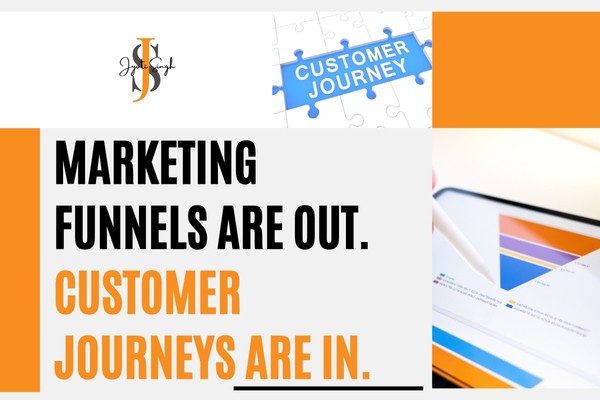
For years, we were told to build a funnel. Top-of-funnel, middle-of-funnel, bottom-of-funnel - a tidy system to "push" people toward a sale.
But here’s the truth: people don’t move in straight lines, they wander, pause, take a look and move again.
Today’s buyer is curious, distracted, and empowered. They jump between tabs, ask for recommendations, read reviews, follow brands on social — before they even consider buying. And so the old funnel model? It's struggling to keep up.
The Problem With Funnels:
- One-size-fits-all. Funnels assume everyone takes the same path.
- Sales-first thinking. Funnels are designed to convert, not connect.
- Rigid and linear. They don’t account for modern, non-linear behaviors.
Why Customer Journeys Work:
- Built around behavior. Journeys are mapped to how real customers explore, consider, and decide.
- Relationship-driven. They prioritize trust and value before the pitch.
- Multi-touch & flexible. Journeys adapt — whether a customer takes 2 steps or 20.
How To Shift From Funnel To Journey:
- Listen first. Map out what your customer is doing, not what you wish they would do.
- Provide value at every touchpoint. Give helpful content, not just CTAs.
- Embrace multiple entry points. Customers may find you on Instagram, then Google, then email.
- Optimize for trust, not just clicks. The goal isn’t just to convert - it’s to be remembered, respected, and recommended.
- Measure beyond conversion. Look at engagement, loyalty, sentiment - not just last-click attribution.
Funnels are built to sell. Journeys are designed to serve. In 2025 and beyond, the brands that win will be the ones that guide, not push.
Read More: 5 Simple Strategies To Make Your Marketing Matter